Argument Analysis: What the Transcript Data Reveal in Trump v. Barbara
The birthright citizenship argument was deeply originalist, doctrinally concentrated, and asymmetrically pressured — and the numbers confirm it.

The Supreme Court heard just over two hours of oral argument on April 1 in Trump v. Barbara, the challenge to President Donald Trump’s executive order ending birthright citizenship for children born in the United States to parents who are undocumented or present on temporary visas. Solicitor General D. John Sauer argued for the government. ACLU National Legal Director Cecillia Wang argued for a class of affected children and families. Trump attended the argument — the first sitting president to do so — and departed after Sauer finished his presentation.
Every lower court to consider the executive order has blocked it. The question before the justices is whether the order complies with the Citizenship Clause of the Fourteenth Amendment and 8 U.S.C. § 1401(a), which codifies birthright citizenship. The government’s theory turns on the phrase “subject to the jurisdiction thereof,” which Sauer argued should be read to require allegiance and domicile — concepts he contended would exclude unauthorized immigrants and temporary visa holders from the clause’s reach. Wang pressed the broader, historically settled reading: virtually everyone born on U.S. soil is a citizen, with narrow exceptions for children of foreign diplomats and hostile occupying forces.
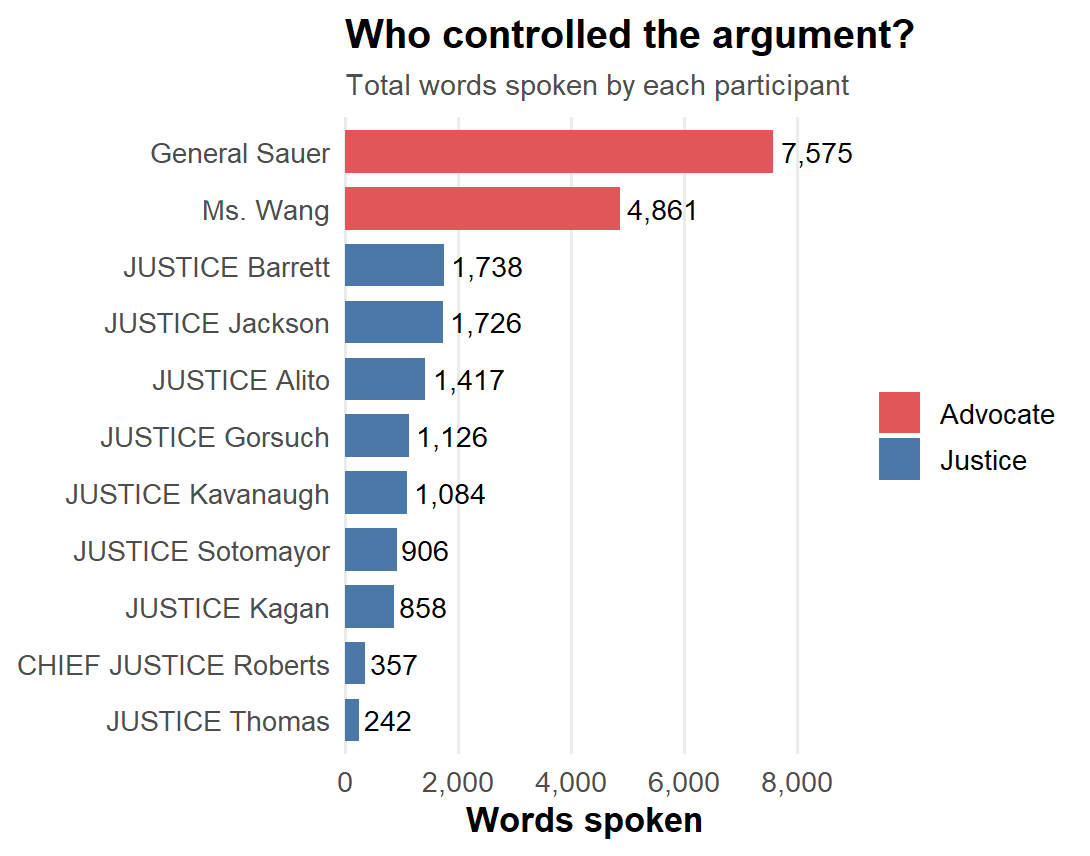
The transcript data tell a layered story about how that argument unfolded — who drove it, what it centered on, and where the pressure fell.
The bench controlled the argument