


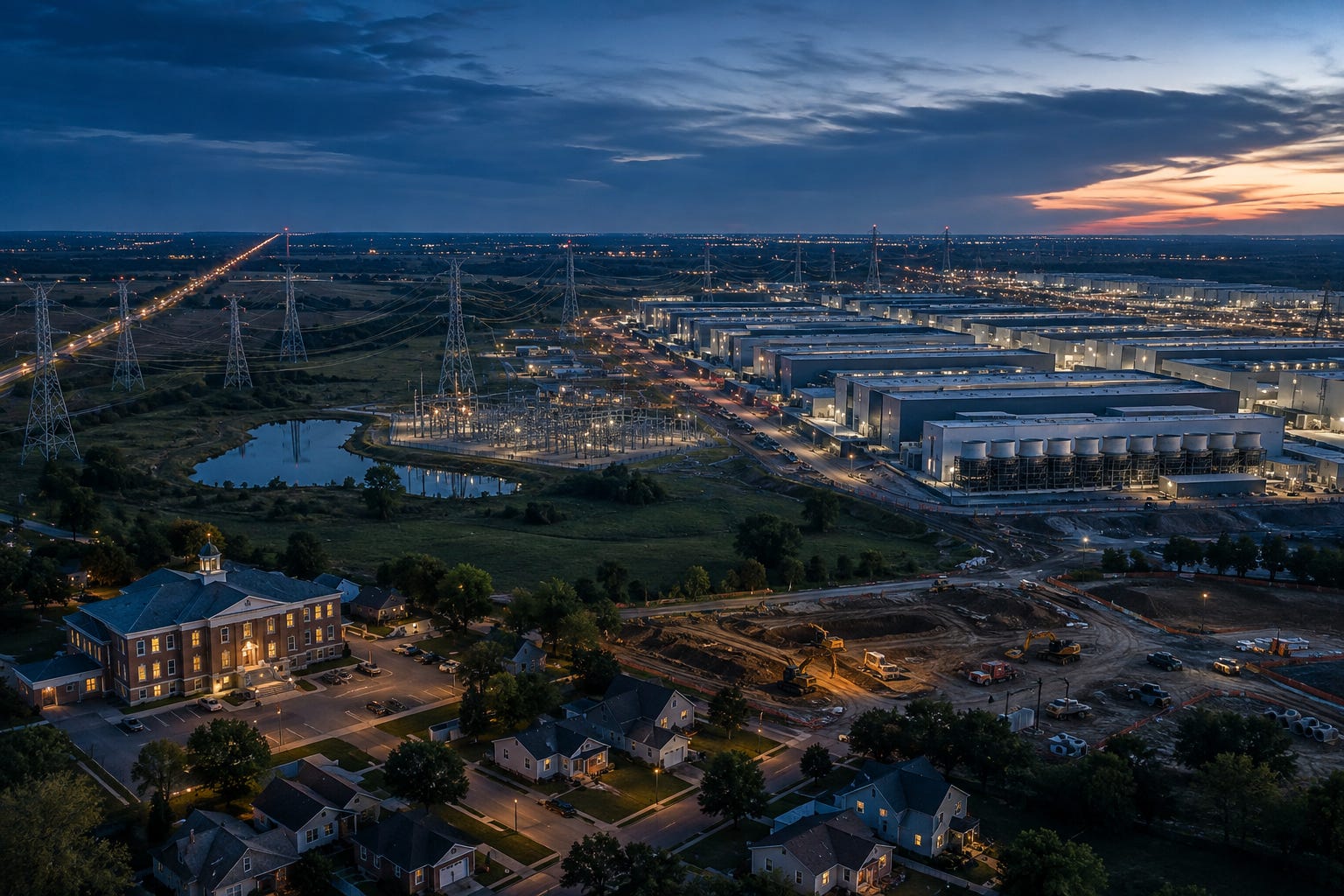
Data centers have recently engendered a similar response upon development: the developer files plans with a city, officials ask for more information, and then a week later the city imposes a moratorium. That is essentially what happened this year in Gibraltar, Michigan, where Raeden Acquisitions submitted an application for a proposed data center at the former McLouth Steel site on February 17. The city requested supplemental material on March 2. On March 9, it adopted a temporary moratorium on data-center development.
Five months later, the developer sued. The sequence is unusually compressed, but the underlying pattern is not. Across at least seven lawsuits filed in 2026, data-center developers have challenged local moratoria after projects had already moved beyond the conceptual stage. In six of the seven disputes identified so far, the developer had reached at least the formal-application stage before the moratorium was imposed. Some had progressed considerably further—assembling hundreds of acres, obtaining preliminary local approvals, beginning utility or interconnection work, or spending substantial sums on development.
Together, the projects for which capacity is publicly disclosed account for just over 3 gigawatts of proposed demand, with one project’s capacity still unverified. And developers have generally not waited long to contest the new restrictions: the median interval between adoption of a moratorium and the filing of a lawsuit is about three weeks.
Those numbers point toward the issue beginning to emerge beneath a rapidly expanding collection of local data-center fights. Communities are trying to create breathing room to confront unusually large new demands for electricity, water, land, and infrastructure. But in the cases reaching court, the pause often comes after a developer has already started moving through the process.
That timing is helping define the legal disputes. The lawsuits raise familiar land-use and constitutional doctrines—vested rights, due process, takings, equal protection, local statutory authority and procedural requirements. But those theories take on greater significance when a moratorium changes the rules for a project already under review rather than simply establishing the rules for projects that may arrive later.
The first cases to resolve also give the issue some practical weight. Hill County, Texas, rescinded its moratorium after being sued and eventually settled with the developer. In Imperial County, California, a court went further, concluding that the county had not made the findings needed to sustain its emergency moratorium and directing that it be set aside.
Seven lawsuits are still an early sample, and five remain pending. But they offer an initial look at where the legal pressure surrounding the data-center buildout is developing.