


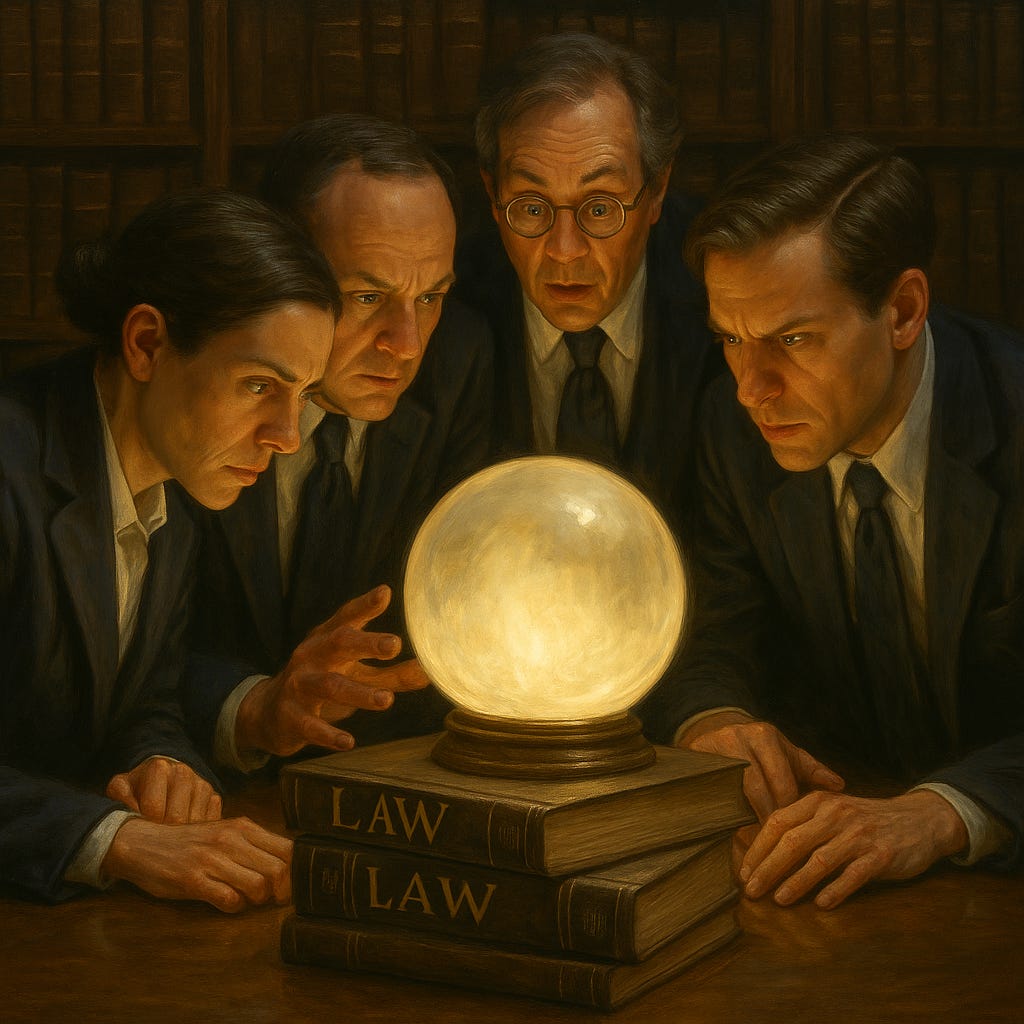
The Supreme Court’s first gate is the hardest to clear. A petition arrives, the Justices meet in private, and most pleas die in conference. Review isn’t a right; it’s a choice the Court makes a few dozen times a year while turning away thousands of petitions, so even a small uptick in the odds matters enormously.
This analysis looks at Terms 2017–20241 and asks a practical question: among private (non-government) lawyers, who consistently moves a case from long shot to granted—and what patterns explain it? The answers aren’t mere leaderboard trivia; they show how the Court reads “importance,” how repeat players shape the docket, and why the right lawyer can lift a petition out of the five-percent fog into the band the Justices actually debate.
To ground the analysis in repeat-player reality, I track twelve private-bar specialists—Lisa Blatt, Andrew Pincus, Daniel Geyser, Allyson Ho, Jeffrey Fisher, Kannon Shanmugam, Shay Dvoretzky, Aaron Streett, Paul Clement, Mark Perry, Neal Katyal, and Adam Unikowsky. For each advocate, I measure petition-side workload and conversion, defense-side effectiveness (denials as a share of grants plus denials when respondent’s counsel), and the amicus footprint both by volume and by identity (the groups most often aligned with their petitions). I also map the opposition ecosystem (the counsel they most frequently face on the other side), track process signals that matter at conference (average relists and time from filing to decision), and test how performance scales with volume—a fuller portrait of who shapes the docket, and how.
[** For previous analyses I ran on this topic see Elites at Cert and Follow the Experts.]
How I chose the cohort
To separate durable skill from a hot streak, I set a high bar: private attorneys who filed 10+ petitions and posted a strict grant rate greater than 20%—computed as grants / (grants plus denials), with GVRs excluded (a GVR is a summary order that grants review, vacates the decision below, and remands for another look in light of new law; it’s meaningful relief, but not a full merits grant) at a minimum. That threshold is roughly four to five times the typical paid-petition baseline and keeps the focus on advocates who both show up and convert.
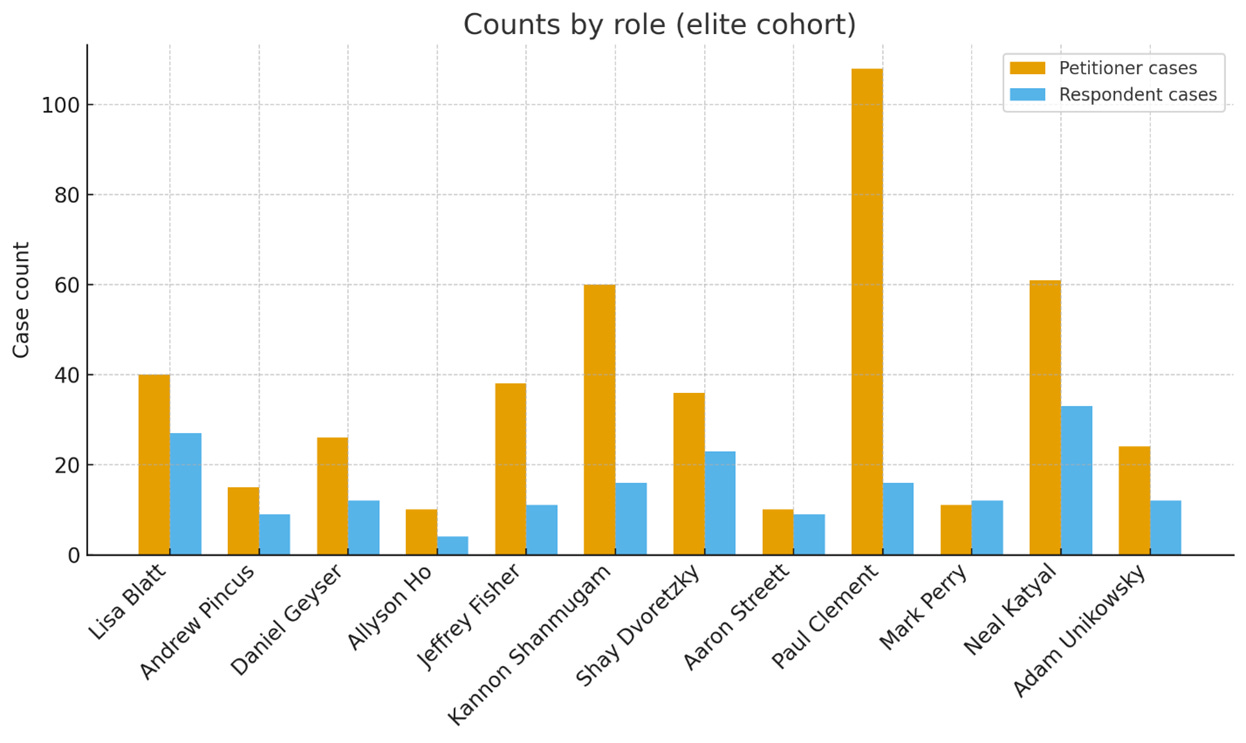
Two patterns emerge immediately. Volume is concentrated: Paul Clement (108 petitions), Neal Katyal (61), and Kannon Shanmugam (60) head a list that also includes Lisa Blatt (40), Jeffrey Fisher (38), Shay Dvoretzky (36), Daniel Geyser (26), Adam Unikowsky (24), Andrew Pincus (15), Mark Perry (11), and Aaron Streett (10) and Allyson Ho (10).